
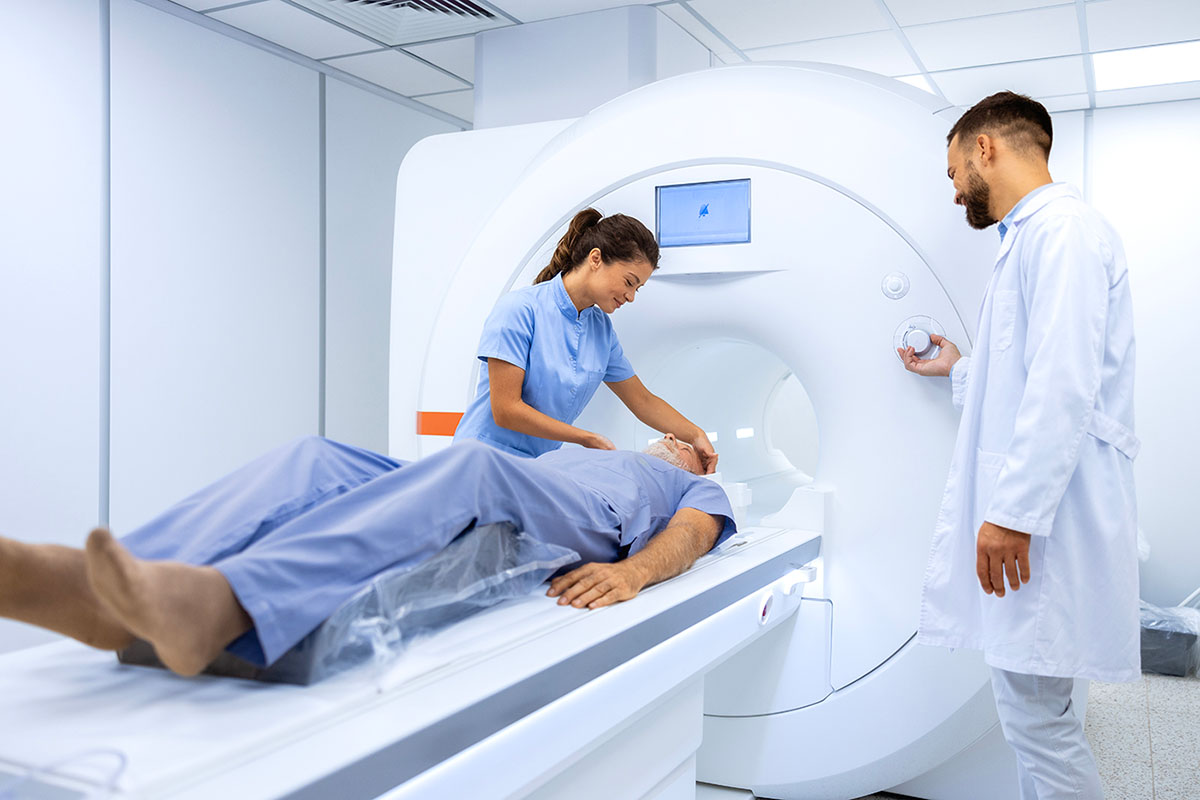
Radiology departments are under increasing pressure to provide timely, high-quality imaging services while managing physician shortages, growing imaging volumes, subspecialty coverage requirements, reimbursement pressure, technology costs, and increasing expectations from patients and referring physicians.
For hospitals, health systems, and radiology groups, improving performance requires more than simply increasing reading capacity. Radiology operational efficiency depends on how effectively staffing, coverage, workflow, technology, scheduling, communication, and financial resources are aligned.
Experienced radiology consulting services can provide an independent, data-driven assessment of these factors and help healthcare organizations identify opportunities to improve clinical, operational, and financial performance.
What Is Radiology Operational Efficiency?
Radiology operational efficiency is the ability to provide high-quality diagnostic and interventional imaging services using available clinical, technological, and financial resources effectively.
Efficiency should not be evaluated solely by the number of studies interpreted or relative value units (RVUs) generated.
A comprehensive assessment may consider:
- Imaging volumes and procedure mix
- Radiologist productivity
- Staffing and coverage requirements
- Report turnaround times
- On-site versus teleradiology coverage
- Subspecialty availability
- Interventional radiology coverage
- Scheduling and patient access
- Technology and workflow
- Revenue-cycle performance
- Quality and service metrics
- Referring-physician satisfaction
- Hospital financial support
Analyzing these factors together can provide leadership with a more accurate understanding of radiology service-line performance.
Evaluate Radiology Staffing and Coverage
One of the most important components of radiology operations is ensuring that physician resources are appropriately aligned with service demand.
Hospitals may require different levels of coverage for inpatient imaging, emergency radiology, outpatient imaging, interventional radiology, and subspecialty services. Coverage requirements can also vary substantially by time of day and day of the week.
A radiology operational assessment should evaluate whether the current staffing model appropriately matches imaging volumes and clinical requirements.
Questions may include:
- Are the appropriate number of radiologists available during peak periods?
- Is after-hours coverage structured efficiently?
- Are subspecialty resources available when needed?
- Is interventional radiology coverage adequate?
- Are radiologists performing work that could be supported by other team members?
- Could a hybrid on-site and teleradiology model improve coverage?
- Are staffing costs sustainable relative to professional revenue and hospital support?
The objective is not simply to reduce staffing. It is to develop a coverage model that balances clinical requirements, service expectations, physician workload, and financial sustainability.
Improve Radiology Workflow and Turnaround Times
Report turnaround time is one of the most visible indicators of radiology performance.
Delays in interpretation can affect emergency department throughput, inpatient length of stay, surgical decision-making, patient satisfaction, and referring-physician relationships.
However, turnaround-time problems are not always caused by radiologist productivity alone.
Operational bottlenecks may occur throughout the imaging process, including:
- Order entry
- Scheduling
- Patient preparation
- Prior authorization
- Protocoling
- Image acquisition
- Technologist workflow
- Worklist management
- Image interpretation
- Report creation
- Critical-results communication
Effective radiology workflow optimization therefore requires evaluation of the entire process rather than focusing exclusively on interpretation time.
Use Data to Measure Radiology Productivity
Radiologist productivity is commonly evaluated using work relative value units (wRVUs), examinations interpreted, procedure mix, or other workload measures.
These metrics can be valuable, but they need context.
For example, two radiologists with different subspecialty responsibilities, interventional obligations, call requirements, administrative responsibilities, or case complexity should not necessarily be evaluated using identical productivity expectations.
Hospitals and radiology groups should consider multiple measures when evaluating performance and compare results with relevant benchmarks whenever possible.
Data-driven radiology consulting can help leadership distinguish between perceived performance problems and measurable operational opportunities.
Evaluate On-Site, Teleradiology, and Hybrid Coverage
Teleradiology has become an important component of many hospital radiology coverage models.
It can provide access to overnight interpretation, subspecialty expertise, overflow capacity, and additional physician resources when local recruitment is difficult.
However, increased reliance on teleradiology can also introduce significant financial and operational considerations.
Organizations should evaluate:
- Cost per interpretation
- Coverage hours
- Turnaround-time requirements
- Subspecialty availability
- Quality expectations
- Communication with clinical teams
- Credentialing requirements
- Technology integration
- Interventional and on-site requirements
- Vendor performance
For some organizations, a hybrid model combining on-site radiologists with strategically deployed teleradiology resources may provide a more sustainable solution.
Strengthen Radiology Revenue-Cycle Performance
Operational efficiency and financial performance are closely connected.
Incomplete documentation, coding issues, payer-contract performance, missed charges, denials, and inefficient billing processes can reduce professional revenue even when imaging volumes remain strong.
Radiology groups should periodically evaluate revenue-cycle performance to determine whether professional services are being accurately documented, coded, billed, and collected.
This analysis may include:
- Coding accuracy
- Documentation
- Charge capture
- Denial trends
- Payer reimbursement
- Accounts receivable
- Net collection performance
- Billing-vendor performance
Accurate coding is also important when productivity is measured using RVUs. Documentation or coding problems can distort productivity data and potentially lead leadership to incorrect conclusions about physician performance.
Provide Ongoing Documentation and Coding Education
Coding and reimbursement requirements continue to evolve, making ongoing education valuable for practicing radiologists.
Radiologists need to understand the documentation requirements associated with the services they provide, particularly when documentation affects coding, reimbursement, or productivity measurement.
Targeted education can help radiologists understand how documentation affects the revenue cycle while allowing professional coding specialists to maintain responsibility for appropriate coding practices.
This is particularly important when organizations use RVUs and other claims-derived information for physician productivity analysis.
Benchmark Radiology Performance
One of the challenges facing hospital and radiology leaders is determining whether current performance is actually appropriate.
A department may appear efficient internally but perform differently when compared with similar organizations.
Relevant benchmarking can help evaluate measures such as:
- Physician productivity
- Staffing
- Coverage
- Turnaround times
- Compensation
- Financial support
- Service utilization
- Revenue-cycle performance
Benchmarking should not be applied mechanically. Facility size, procedure mix, coverage requirements, subspecialty needs, geography, and service expectations can materially affect appropriate performance levels.
The objective is to use benchmarking as a decision-support tool rather than treating a single benchmark as a universal performance standard.
Identify Opportunities for Radiology Service-Line Growth
Operational improvement is not limited to reducing costs.
A comprehensive radiology assessment may identify opportunities to expand services, increase imaging capacity, improve patient access, or capture procedures currently leaving the health system.
Potential opportunities may include:
- Expanding outpatient imaging
- Adding imaging capacity
- Increasing interventional radiology services
- Expanding subspecialty coverage
- Improving scheduling and patient access
- Evaluating new technology
- Reducing patient leakage
- Developing new service locations
These opportunities should be evaluated using operational and financial analysis to determine whether they are sustainable.
How Radiology Consulting Services Can Help
An independent radiology consultant can evaluate the service line from a broader perspective than individual performance metrics alone.
A comprehensive radiology consulting engagement may include:
- Operational assessment
- Financial assessment
- Staffing and coverage analysis
- Radiologist productivity analysis
- Workflow and turnaround-time evaluation
- Teleradiology strategy
- Revenue-cycle review
- Data benchmarking
- Contract analysis
- RFP support
- Service expansion analysis
- Implementation planning
The result should be more than a list of observations. Leadership should receive prioritized, actionable recommendations supported by operational and financial analysis.
Improving Radiology Performance Requires a Comprehensive Approach
Radiology operational efficiency depends on the interaction among people, processes, technology, clinical requirements, and financial resources.
Focusing on only one metric—whether productivity, turnaround time, staffing, or cost—can overlook the underlying causes of performance problems.
By evaluating the radiology service line comprehensively, hospitals, health systems, and radiology groups can identify opportunities to improve workflow, strengthen coverage, manage costs, increase access, and build a more sustainable service model.
Enhance Healthcare Consulting provides independent radiology consulting services to hospitals, health systems, and radiology groups seeking to improve operational and financial performance.
Learn more about EHC’s radiology consulting services or Contact Enhance Healthcare Consulting to discuss your organization’s radiology challenges.
Written by Andrew Mazzella — Radiology Business & Operations Consultant
Andrew Mazzella is a healthcare administrator and radiology consultant with more than 25 years of experience in practice management, healthcare operations, financial management, strategic growth, and process improvement.
Since 2003, Andrew has held leadership roles in radiology management. He serves as CEO of Radiologic Associates, P.C., a private radiology group supporting hospital systems, outpatient imaging centers, and medical practices across New York, New Jersey, and Pennsylvania. Since 2016, he has also served as a Radiology Consultant with Enhance Healthcare Consulting, advising healthcare organizations on radiology operations, financial performance, practice management, and strategic growth.
Andrew is an active member of the Medical Group Management Association (MGMA) and the Radiology Business Management Association (RBMA).
[Read Andrew Mazzella’s Full Bio] | [Connect with Andrew on LinkedIn]
Subscribe to receive articles by email
Get notifed by email when we release new Insights!