
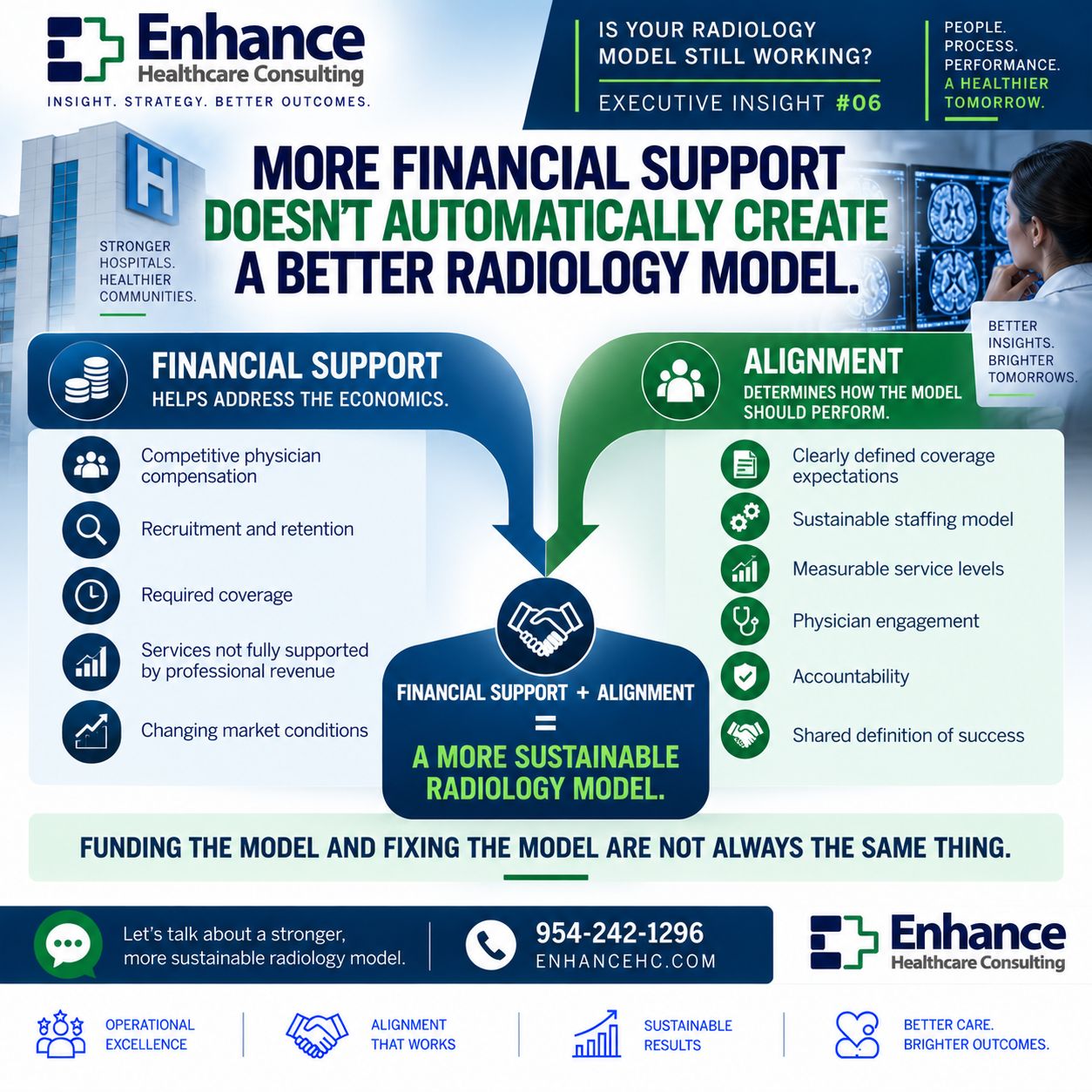
𝗠𝗼𝗿𝗲 𝗳𝗶𝗻𝗮𝗻𝗰𝗶𝗮𝗹 𝘀𝘂𝗽𝗽𝗼𝗿𝘁 𝗰𝗮𝗻 𝘀𝘂𝘀𝘁𝗮𝗶𝗻 𝗮 𝗿𝗮𝗱𝗶𝗼𝗹𝗼𝗴𝘆 𝗺𝗼𝗱𝗲𝗹. 𝗕𝘂𝘁 𝗶𝘁 𝗱𝗼𝗲𝘀𝗻’𝘁 𝗻𝗲𝗰𝗲𝘀𝘀𝗮𝗿𝗶𝗹𝘆 𝗳𝗶𝘅 𝗶𝘁.
As hospitals increase financial support for radiology services, there’s an important distinction I believe both hospital and radiology leadership should consider:
𝗙𝗶𝗻𝗮𝗻𝗰𝗶𝗮𝗹 𝘀𝘂𝗽𝗽𝗼𝗿𝘁 𝗮𝗻𝗱 𝗼𝗽𝗲𝗿𝗮𝘁𝗶𝗼𝗻𝗮𝗹 𝗮𝗹𝗶𝗴𝗻𝗺𝗲𝗻𝘁 𝗮𝗿𝗲 𝗻𝗼𝘁 𝘁𝗵𝗲 𝘀𝗮𝗺𝗲 𝘁𝗵𝗶𝗻𝗴.
Additional funding may be necessary to address legitimate economic pressures—radiologist compensation, recruitment and retention, coverage requirements, or services that professional revenue alone cannot adequately support.
But additional funding by itself doesn’t necessarily resolve:
- Unclear coverage expectations.
- An unsustainable staffing structure.
- Poorly defined performance standards.
- Physician engagement challenges.
- Operational inefficiencies.
- A contract that no longer reflects the realities of the market.
That’s why I believe a sustainable radiology relationship requires 𝗯𝗼𝘁𝗵 𝗲𝗰𝗼𝗻𝗼𝗺𝗶𝗰𝘀 𝗮𝗻𝗱 𝗮𝗹𝗶𝗴𝗻𝗺𝗲𝗻𝘁.
The hospital should understand what it is funding and what services and performance it should reasonably expect.
The radiology provider should understand what it is committing to deliver and whether the resources and staffing model can realistically support those expectations.
And both parties should agree on 𝗵𝗼𝘄 𝘀𝘂𝗰𝗰𝗲𝘀𝘀 𝘄𝗶𝗹𝗹 𝗯𝗲 𝗺𝗲𝗮𝘀𝘂𝗿𝗲𝗱. 𝗙𝘂𝗻𝗱𝗶𝗻𝗴 𝘁𝗵𝗲 𝗺𝗼𝗱𝗲𝗹 𝗮𝗻𝗱 𝗳𝗶𝘅𝗶𝗻𝗴 𝘁𝗵𝗲 𝗺𝗼𝗱𝗲𝗹 𝗮𝗿𝗲 𝗻𝗼𝘁 𝗮𝗹𝘄𝗮𝘆𝘀 𝘁𝗵𝗲 𝘀𝗮𝗺𝗲 𝘁𝗵𝗶𝗻𝗴.
The objective should be to do both: 𝗕𝘂𝗶𝗹𝗱 𝘀𝘂𝘀𝘁𝗮𝗶𝗻𝗮𝗯𝗹𝗲 𝗲𝗰𝗼𝗻𝗼𝗺𝗶𝗰𝘀—𝗮𝗻𝗱 𝗮𝗹𝗶𝗴𝗻 𝘁𝗵𝗼𝘀𝗲 𝗲𝗰𝗼𝗻𝗼𝗺𝗶𝗰𝘀 𝘄𝗶𝘁𝗵 𝘀𝘁𝗮𝗳𝗳𝗶𝗻𝗴, 𝗰𝗼𝘃𝗲𝗿𝗮𝗴𝗲, 𝗽𝗲𝗿𝗳𝗼𝗿𝗺𝗮𝗻𝗰𝗲 𝗮𝗻𝗱 𝗮𝗰𝗰𝗼𝘂𝗻𝘁𝗮𝗯𝗶𝗹𝗶𝘁𝘆.
𝗜𝘀 𝗬𝗼𝘂𝗿 𝗥𝗮𝗱𝗶𝗼𝗹𝗼𝗴𝘆 𝗠𝗼𝗱𝗲𝗹 𝗦𝘁𝗶𝗹𝗹 𝗪𝗼𝗿𝗸𝗶𝗻𝗴?
Subscribe to receive articles by email
Get notifed by email when we release new Insights!